
Quartz vs Granite Countertops: Which Is Better for Your Kitchen?
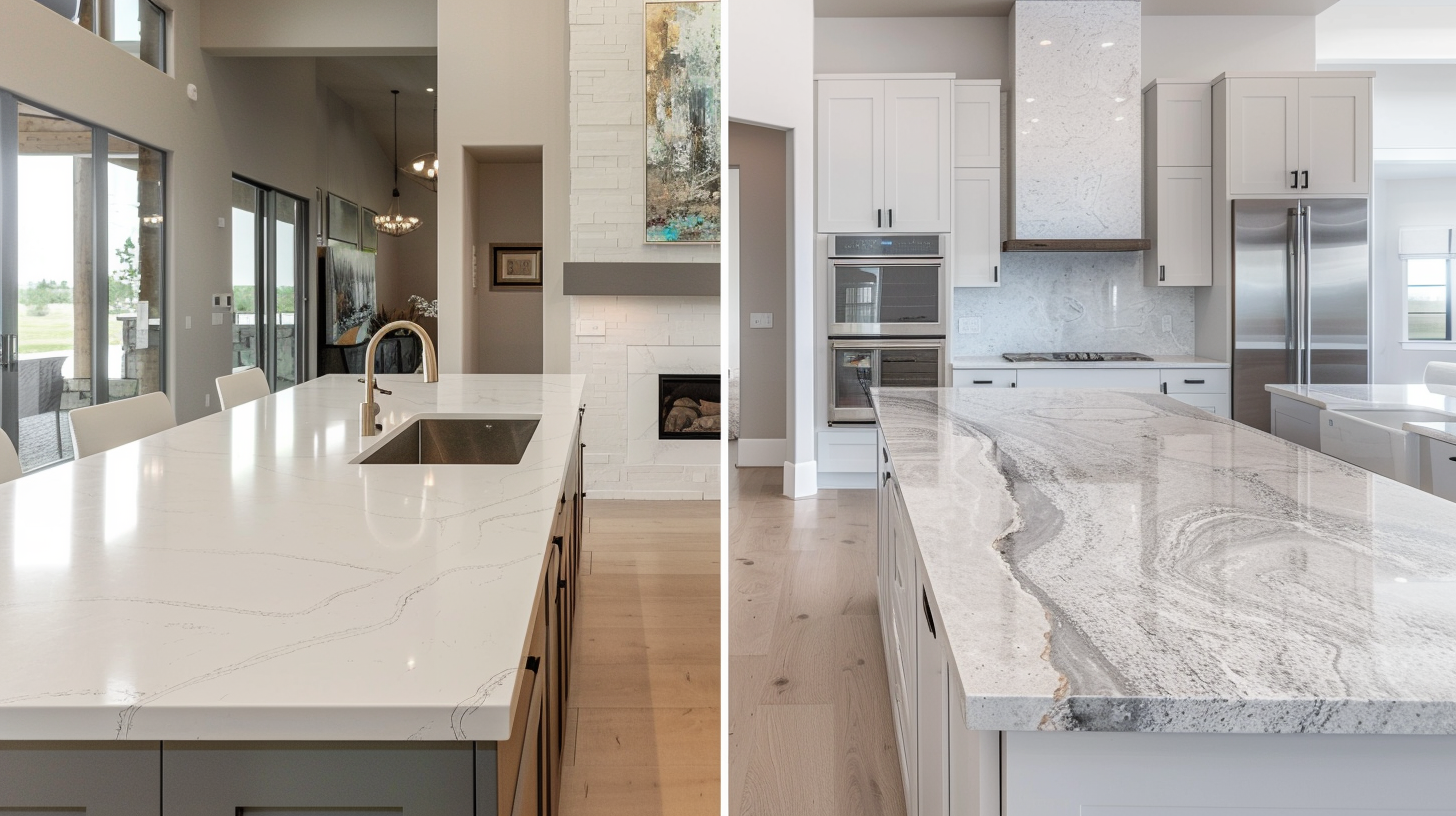
Quartz and granite are both excellent countertop materials, but they suit different households. Quartz is engineered, non-porous, and requires no sealing -- making it the lower-maintenance option for busy Utah families. Granite is a natural stone with unique character, handles heat directly from the stove, and typically costs slightly less per square foot. The right choice depends on how you cook, how much upkeep you want, and the look you are after. Terra Kitchen and Bath helps Utah homeowners choose and install both -- contact us for a free consultation.
If you have spent any time looking at countertop options for a kitchen remodel, you have probably spent most of that time comparing two materials: quartz and granite. Both are durable. Both look beautiful in a finished kitchen. And both get strong recommendations from contractors and designers.
But they are not the same material, and the differences matter depending on how you actually use your kitchen. This guide breaks down the real distinctions -- cost, durability, maintenance, appearance, heat and stain resistance -- so you can make a confident decision before your remodel starts.
What Is Quartz? What Is Granite?
Quartz countertops are engineered stone. They are made from roughly 90 to 94 percent ground quartz crystals combined with resins and pigments. Because the material is manufactured, the patterns and colors are consistent and controlled. What you see in the showroom is what you get.
Granite countertops are natural stone, quarried from the earth. Each slab is one of a kind. The veining, mineral deposits, and color variation are formed over millions of years and cannot be replicated. Two pieces of granite from the same quarry will look different from each other.
Both materials are available in hundreds of colors and finishes. Both can be fabricated to fit any kitchen layout. And both are considered premium countertop materials that hold resale value well in the Utah housing market.
Quartz vs Granite: Side-by-Side Comparison
Here is how the two materials compare across the factors that matter most in a working kitchen:
Durability
Both materials are built for daily kitchen use and will outlast most other surfaces in your home. Quartz has a slight durability edge because its engineered composition is uniform throughout -- no natural fissures, no soft mineral inclusions that can chip under impact. Granite, being a natural material, occasionally has small fissures or mineral variations that are more vulnerable at corners and edges, particularly with a sharp impact.
In practical terms for a Utah household, both will hold up for decades with normal use. The durability difference becomes relevant only if you are prone to dropping heavy objects or you have kids who treat countertops as cutting surfaces.
Maintenance Requirements
This is where quartz pulls clearly ahead for most Utah homeowners. Because quartz is non-porous by manufacturing design, it does not absorb liquids, resists bacteria and mold, and cleans up completely with warm water and mild soap. There is no annual sealing requirement, no special cleaners needed, and no risk of staining from a forgotten wine glass.
Granite must be sealed when installed and resealed roughly every one to two years depending on use. Without proper sealing, granite is vulnerable to staining from oil, wine, citrus, and other acidic liquids that are common in any kitchen. The sealing process is straightforward -- it takes about 30 minutes and can be done yourself -- but it is an ongoing maintenance commitment that quartz eliminates entirely.
Appearance and Aesthetic Options
This is genuinely a matter of preference, but the difference in character is significant. Quartz gives you consistency. Every square inch of your countertop will match the slab you chose in the showroom. Brands like Caesarstone, Cambria, and Silestone produce hundreds of patterns, including convincing marble-look options, and they are all manufactured to look exactly as shown.
Granite gives you singularity. The slab in your kitchen exists nowhere else. The movement, depth, and mineral variation in natural stone have an authenticity that no engineered product fully replicates. For homeowners who prioritize a high-end, artisan look, granite's natural character is often the decisive factor.
Cost Comparison
In Utah, quartz and granite are priced comparably at most countertop suppliers and installation companies. Installed quartz runs $50 to $120 per square foot depending on brand, thickness, and edge profile. Installed granite runs $40 to $110 per square foot, with exotic imported slabs pushing above that range.
Entry-level granite is often less expensive than entry-level quartz. Premium quartz brands (Cambria, Silestone HybriQ+) can cost more than mid-range granite. The meaningful cost difference over time comes from maintenance -- granite's annual sealing is a minor but real ongoing expense.
Heat and Stain Resistance
Granite wins on heat. You can set a pan directly from the stove or oven on granite without damage. This matters if you cook with cast iron, use a wok, or do any canning or baking that involves moving hot items quickly from the stove to the counter.
Quartz loses on heat. The resins in engineered stone are not heat-tolerant. Direct contact with a hot pan, a slow cooker, or even an instant pot can cause discoloration or cracking in quartz. This is a real limitation you need to plan for -- trivets become essential workflow items, not optional.
On staining, quartz wins clearly. Its non-porous surface resists penetration from virtually any liquid. Granite with a fresh, properly applied seal is also quite stain-resistant, but the protection degrades over time. A spill on neglected or worn-down granite can permanently stain the surface.
Which Countertop Is Better for Utah Kitchens?
Utah's climate and lifestyle have a few specific implications for countertop choice:
- Utah's dry air is not a significant factor for either stone material -- unlike wood, neither quartz nor granite is affected by low humidity.
- Hard water mineral deposits are common across the Wasatch Front and Utah Valley. Both surfaces can show hard water spots, but quartz wipes clean more easily without streaking or residue buildup.
- Outdoor kitchen applications are common in Utah. Granite handles direct heat and sun exposure better than quartz -- if you are building an outdoor kitchen, granite is the appropriate choice for the countertop surface.
- Many Utah homeowners also have growing families with kids and active kitchens. Quartz's non-porous, no-maintenance surface is a better fit for households where countertops see heavy daily use without dedicated upkeep.
For most indoor Utah kitchens, both materials perform well year-round. Quartz is the right choice for busy households that want a beautiful surface with no maintenance demands. Granite is the right choice for homeowners who love natural stone, cook heavily with heat, and will commit to a simple sealing schedule.
Quartz vs Granite vs Marble: A Quick Look
If marble is also on your list, here is a three-way comparison at a glance:
Marble is stunning in photographs and showrooms, but it requires significant ongoing care that makes it a difficult choice for a working kitchen. If you love the marble look, a quartz product designed to mimic marble -- such as Calacatta Gold quartz or similar patterns from Caesarstone and Cambria -- delivers the aesthetic without the vulnerability.
Frequently Asked Questions
Q: Is quartz or granite more expensive in Utah?
A: They are comparable. Installed quartz runs $50 to $120 per square foot and installed granite runs $40 to $110 per square foot in Utah. Budget granite is often slightly less expensive than entry-level quartz. Premium quartz brands can cost more than mid-range granite.
Q: Does granite need to be sealed every year?
A: Granite in a working kitchen should be resealed every one to two years. A simple test tells you when it is time -- sprinkle water on the surface, and if the water soaks in rather than beading, the sealer needs refreshing. The process takes about 30 minutes and can be done yourself with a product from any home improvement store.
Q: Can I put a hot pan directly on quartz countertops?
A: No. The polymer resins in engineered quartz are not heat-resistant. Direct contact with hot cookware can cause permanent discoloration or cracking. Always use a trivet or heat pad. Granite handles direct heat without damage, making it the better choice if you frequently move hot items from the stove to the counter.
Q: Which countertop material is better for resale value in Utah?
A: Both quartz and granite are considered premium countertop materials that appeal to buyers and support home value. Quartz has grown significantly in popularity and is broadly recognized by homebuyers. Natural granite, particularly distinctive slabs, can be a standout feature in higher-end homes. Neither choice is a liability at resale in Utah's current market.
Q: What countertop works best with white shaker cabinets?
A: White quartz with subtle grey or gold veining is one of the most popular pairings for white shaker cabinets. Calacatta-look quartz is particularly strong. For granite, white or grey toned slabs with natural movement work beautifully. The consistent pattern of quartz is often easier to design around than the natural variation of granite when cabinets are neutral.
Ready to Choose Your Countertops?
The best way to decide between quartz and granite is to see both in your kitchen's lighting and against your cabinet color. At Terra Kitchen and Bath, we carry a full selection of quartz and granite options and will show you exactly how each material works in your specific space.
If you are planning a kitchen remodel in Utah, contact Terra Kitchen and Bath for a free consultation. We serve the Salt Lake Valley, Utah Valley, Ogden, and surrounding communities.